Evaluating Abstract Retro Neon Seamless Patterns for Modern Design Projects
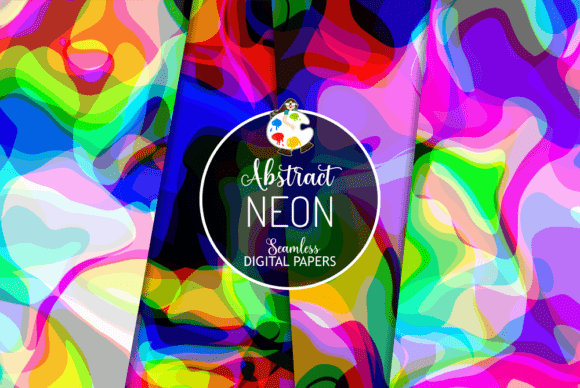
In the contemporary digital landscape, visual identity relies heavily on texture, mood, and seamless continuity. Among the various aesthetic trends available to designers, Abstract Retro Neon Seamless Patterns have emerged as a distinct category that bridges nostalgic analog warmth with high-precision digital execution. This specific style is characterized by its vibrant, glowing color palettes reminiscent of 1980s synthwave culture, combined with fluid, psychedelic curves and wave-like energy. For professionals evaluating assets for web design, print media, or motion graphics, understanding the technical specifications and artistic nuances of these patterns is essential for making an informed decision.
Defining the Aesthetic: What Makes It Distinct?
The term "Abstract Retro Neon" refers to a visual language that prioritizes atmosphere over literal representation. Unlike geometric minimalism or photorealistic textures, this style focuses on emotional resonance through color and form. The core elements typically include:
- Lava and Flow: Organic, melting shapes that suggest movement and fluidity.
- Psychedelic Vibrancy: High-contrast colors, often featuring electric purples, hot pinks, cyan blues, and acid greens.
- Electronic Energy: A sense of rhythm and pulse, often achieved through repeating waveforms or gradient shifts.
- Retro-Futurism: An homage to vintage technology interfaces and analog screen artifacts, reimagined with modern clarity.
What distinguishes a high-quality set of Abstract Retro Neon Seamless Patterns from generic background images is the concept of seamlessness. In design, a seamless pattern must tile perfectly in all directions without visible breaks, lines, or misalignments. This allows the pattern to be scaled infinitely, making it suitable for large-format prints, full-screen website backgrounds, or looping video textures. The distinction lies not just in the artistry but in the technical precision required to ensure that the edge of one tile matches the opposite edge flawlessly.
Technical Specifications and File Integrity
When comparing options for digital assets, resolution and format are critical decision factors. A robust set of Abstract Retro Neon Seamless Patterns typically offers significant advantages in terms of versatility. Consider a standard premium offering that includes four unique designs, each rendered at 300 DPI (dots per inch) with dimensions of 4096 by 4096 pixels.
Why do these metrics matter? First, the 4096x4096 pixel dimension provides ample data for both small-scale applications (such as mobile app icons or social media thumbnails) and large-scale outputs (such as exhibition banners or wall murals). At 300 DPI, the image maintains crisp edges and smooth gradients even when printed physically. Many free or low-cost alternatives may offer lower resolutions (e.g., 72 DPI), which appear pixelated or blurry when scaled up. Furthermore, the JPG format ensures broad compatibility across almost all design software, operating systems, and web browsers, reducing workflow friction.
However, users should evaluate whether the file size associated with high-resolution JPGs fits their storage and bandwidth constraints. While 4096x4096 JPGs are generally manageable, projects requiring infinite scalability might benefit from vector-based alternatives, though these often lack the complex gradient depth inherent to neon aesthetics.
Comparative Analysis: Style Versus Alternatives
Designers rarely choose a single style in isolation. When considering Abstract Retro Neon Seamless Patterns, it is helpful to compare them against other popular background categories to determine the best fit for a specific project.
Neon vs. Minimalist Gradients
Minimalist gradients offer a clean, corporate, and understated look. They are excellent for SaaS platforms or financial apps where trust and clarity are paramount. In contrast, Abstract Retro Neon Seamless Patterns are inherently loud and expressive. They draw attention rather than receding into the background. If a project requires a user interface that feels energetic, youthful, or creative—such as a music streaming service, a gaming platform, or an event promotion—the neon approach is superior. However, for dense text-heavy layouts, the high contrast of neon patterns can reduce readability, necessitating careful layering and opacity adjustments.
Neon vs. Photographic Textures
Photographic textures (like concrete, wood, or fabric) provide realism and tactile grounding. They work well in lifestyle branding or interior design contexts. Abstract neon patterns, being entirely synthetic, offer a dreamlike or futuristic quality. They cannot mimic real-world materials but excel at creating immersive digital environments. The choice here depends on whether the brand wants to feel "grounded in reality" or "transportive and imaginative."
Neon vs. Geometric Patterns
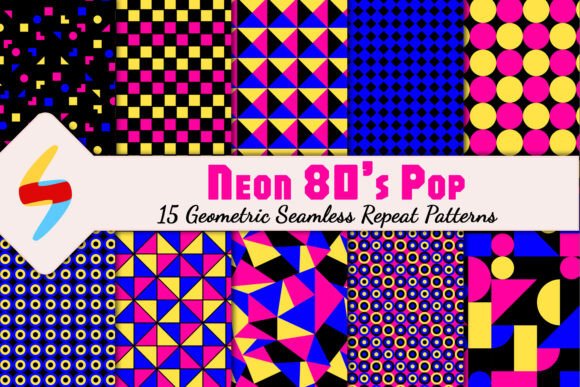
Geometric patterns rely on sharp lines, grids, and mathematical precision. They convey order, stability, and structure. The Abstract Retro Neon style, with its emphasis on waves, lava flows, and curves, conveys chaos, emotion, and dynamism. For brands focusing on innovation, nightlife, entertainment, or creative arts, the organic flow of neon patterns is more aligned with the message than rigid geometry.
Evaluation of Strengths and Tradeoffs
Understanding the tradeoffs of using Abstract Retro Neon Seamless Patterns helps in setting realistic expectations. Below is an analysis of the primary benefits and potential limitations.
Strengths
- Versatility Across Media: Due to the seamless nature and high resolution, these patterns can be used identically on a business card and a billboard without losing quality.
- Emotional Impact: The retro-neon palette triggers nostalgia while feeling modern. It effectively captures attention in crowded digital feeds.
- Cohesion: A set of four unique designs within the same style family allows for consistent branding across multiple touchpoints (e.g., website header, email footer, packaging) while providing enough variation to prevent visual fatigue.
Limitations and Tradeoffs
- Readability Challenges: The high saturation and complexity of neon waves can interfere with text legibility. Designers must use solid overlays, drop shadows, or negative space to ensure content remains accessible.
- Niche Appeal: This style is highly specific. It may not suit conservative industries such as law, healthcare, or traditional finance, where a more subdued palette is preferred.
- Screen Dependency: The "glow" effect of neon is most effective on backlit screens. On matte paper prints, the vibrancy may appear slightly muted compared to the digital preview, requiring color profile adjustments during printing.
Decision Factors: When to Choose This Style
Selecting Abstract Retro Neon Seamless Patterns is not merely an aesthetic preference; it is a strategic decision based on target audience and project goals. Here are scenarios where this asset type is particularly advantageous:
- Digital Entertainment and Gaming: Games, especially those with cyberpunk, synthwave, or arcade themes, benefit immensely from the electronic energy and curve dynamics of these patterns. The seamless tiling supports infinite scrolling levels or background loops.
- Event and Festival Branding: Music festivals, club nights, and art exhibitions require visuals that communicate excitement and movement. The lava and wave motifs naturally suggest motion, enhancing the perceived energy of the event.
- Creative Portfolio Backgrounds: For graphic designers, photographers, or artists, using abstract neon patterns as a backdrop for portfolio items can create a striking contrast that makes the featured work pop, provided the overlay technique is used correctly.
- Social Media Campaigns: In an era of short attention spans, high-contrast, colorful patterns stand out in newsfeeds. They are ideal for story highlights, cover photos, and promotional banners.
Conversely, readers should consider alternative resources if their project demands strict accessibility compliance without heavy modification, requires a minimalist corporate identity, or needs textures that mimic physical materials for hyper-realistic rendering.
Practical Application Tips
To maximize the value of a set containing four 4096x4096 pixel JPGs, designers should employ specific techniques:
- Layering: Place the seamless pattern behind main content areas. Use CSS properties like background-size: cover or repeat depending on the layout needs.
- Opacity Adjustment: Reducing the opacity of the neon pattern to 10–20% can create a subtle texture that adds depth without overwhelming the foreground content.
- Color Harmonization: Ensure the neon colors complement the primary brand colors. If the brand uses blue and orange, select a pattern that features similar hues to maintain visual harmony.
- Testing Tiling: Always preview the pattern in a tiled view before finalizing designs. Check for any visible seams or awkward transitions between the left/right and top/bottom edges.
In conclusion, Abstract Retro Neon Seamless Patterns represent a specialized yet powerful tool in the designer’s arsenal. Their combination of high-resolution technical specs, nostalgic aesthetic appeal, and dynamic visual energy makes them suitable for a wide range of creative projects. By carefully weighing their strengths against the specific requirements of readability, industry norms, and medium, professionals can leverage these assets to create visually compelling and technically sound designs. Whether used for immersive web experiences or bold print collateral, they offer a distinct alternative to more conventional background styles, provided they are applied with strategic intent.